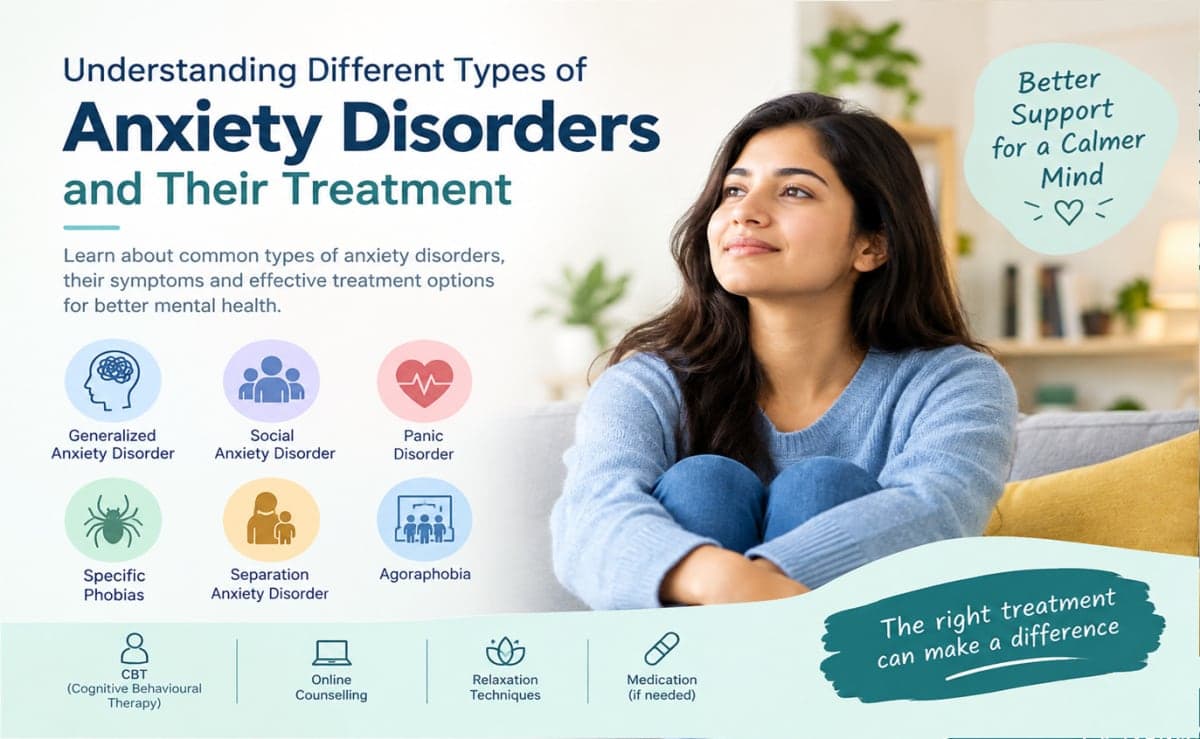
Understanding Different Types of Anxiety Disorders and Their Treatment
If anxiety is affecting your daily routine, TalkMedX can help you explore online anxiety counselling and personalized mental health support from qualified professionals.
Anxiety is a normal feeling when we face stress or difficult situations. However, when fear and worry become too strong or last for a long time, they may be signs of an anxiety disorder. These problems can affect sleep, work, relationships, and daily life.
Understanding different types of anxiety disorders and their treatment can help people find the right support. With proper care, therapy, and healthy habits, people can learn to manage anxiety and feel better.
What Are Anxiety Disorders?
Anxiety disorders are mental health problems that cause too much fear, worry, or nervousness. These feelings can happen even when there is no real danger.
People with anxiety may find it hard to relax, sleep, or focus on daily tasks. They may also have a fast heartbeat, sweating, or feel restless. Getting help from a mental health expert can make these symptoms easier to manage.
1. Generalized Anxiety Disorder (GAD)
Generalized Anxiety Disorder causes people to worry too much about daily life. They may worry about money, work, family, health, or future events, even when there is no clear reason.
Common Symptoms:
- Worrying too much about small things.
- Finding it hard to control negative thoughts.
- Feeling tired or restless.
- Having trouble sleeping.
- Finding it hard to focus on daily tasks.
Treatment: Cognitive Behavioural Therapy (CBT) can help people understand their thoughts and manage worry. Online anxiety counselling, relaxation exercises, and medicine prescribed by a doctor may also help.
2. Social Anxiety Disorder
Social Anxiety Disorder causes a strong fear of meeting people or speaking in public. People with this condition often worry that others will judge or laugh at them.
They may avoid parties, meetings, public speaking, or new social situations.
Common Symptoms:
- Fear of talking to new people.
- Avoiding social events and public places.
- Worrying about what others think.
- Sweating or shaking during conversations.
- Feeling nervous when speaking in groups.
Treatment: Online anxiety therapy can help people feel more comfortable in social situations. CBT and exposure therapy can teach them how to manage fear and build confidence step by step.
3. Panic Disorder
Panic Disorder causes sudden attacks of intense fear. These attacks can happen without warning and may make a person feel that something bad is about to happen.
A person may feel scared of having another panic attack, even when they are safe.
Common Symptoms:
- Fast heartbeat and chest discomfort.
- Trouble breathing.
- Sweating and shaking.
- Feeling dizzy or weak.
- Fear of losing control.
Treatment: CBT is a common treatment for panic disorder. A therapist can teach simple breathing exercises and ways to manage fearful thoughts. A doctor may also suggest medicine when needed.
New or severe chest pain or breathing problems need urgent medical care.
4. Specific Phobias
Specific phobias cause a strong fear of certain things or situations. These may include heights, insects, flying, injections, or small spaces.
People with phobias may avoid these things because they feel unsafe or scared.
Common Symptoms:
- Strong fear of a specific object or situation.
- Avoiding places that cause fear.
- Sweating or shaking.
- Fast heartbeat.
- Feeling very nervous near the source of fear.
Treatment: Exposure therapy is often used to treat specific phobias. It helps people face their fears slowly and safely with support from a trained therapist.
5. Separation Anxiety Disorder
Separation Anxiety Disorder causes strong fear when a person is away from someone they love or depend on.
It can affect children as well as adults. People may worry too much about their loved ones' safety.
Common Symptoms:
- Fear of staying away from loved ones.
- Worrying about family members getting hurt.
- Feeling uncomfortable when alone.
- Trouble sleeping without a loved one nearby.
- Avoiding school, work, or other daily activities.
Treatment: Therapy can help people feel safe and become more comfortable when they are away from loved ones. CBT and family support may also help improve emotional health.
6. Agoraphobia
Agoraphobia causes fear of places where a person may feel trapped or unable to get help. These places may include crowded markets, buses, trains, or shopping centres.
Some people with agoraphobia may even find it hard to leave their homes.
Common Symptoms:
- Fear of crowded places.
- Avoiding buses and trains.
- Feeling unsafe outside the home.
- Fear of travelling alone.
- Feeling anxious in open or closed spaces.
Treatment: CBT and exposure therapy can help people feel safer in places they fear. A trained mental health expert can guide them through small steps to build confidence.
Effective Treatment Options for Anxiety Disorders
Anxiety treatment depends on a person's symptoms and needs. A mental health expert can suggest the right treatment plan.
Some common treatment options include:
- Cognitive Behavioural Therapy (CBT): Helps people understand negative thoughts and learn better ways to handle them.
- Online Anxiety Counselling: Allows people to talk to mental health experts from the comfort of their homes.
- Exposure Therapy: Helps people face their fears slowly with professional support.
- Medication: A psychiatrist may suggest medicine to help manage anxiety symptoms.
- Relaxation Exercises: Deep breathing, meditation, and mindfulness can help calm the mind.
How Online Anxiety Therapy Can Help
Online anxiety therapy makes it easier to get mental health support from home. People can speak with a qualified therapist through online sessions without travelling.
It can help people who feel nervous about meeting someone in person or have busy daily schedules.
During online anxiety counselling, people can share their worries, understand their feelings, and learn simple ways to manage stress. Regular therapy sessions can also help build confidence and improve emotional health.
When Should You Seek Professional Help?
You should speak to a mental health expert when anxiety starts affecting your daily life. This may include problems with sleep, work, family, or social activities.
You should also seek help if you have frequent panic attacks or cannot control your worries. Getting support at the right time can help you manage symptoms and feel more confident.
Conclusion
Understanding different types of anxiety disorders and their treatment can help people take better care of their mental health. Generalized anxiety, social anxiety, panic disorder, and phobias can affect people in different ways.
With the right therapy and support, it is possible to manage anxiety and enjoy a better quality of life.
If anxiety is affecting your daily routine, TalkMedX can help you explore online anxiety counselling and personalized mental health support from qualified professionals.